E-BIKES · BUYING GUIDE · RESEARCH-BASED
The short answer
For most people commuting 3 to 12 miles each way, a commuter e-bike needs four things: usable power delivery, disc brakes at both ends, integrated lights and fenders, and a battery with a recognised safety certification. Our pick is the Gotrax R7 20″, because it is the only bike here that is UL 2849 certified and has a real body of owner feedback behind it, 374 ratings against fewer than ten for everything else. If you want a lighter, faster-rolling 26 inch bike and can accept a much shorter track record, the Heybike Cityscape 2.0 is the one to look at. Skip anything that will not tell you its certification, no matter how cheap.
Disclosure: Sustainable Transportation is reader-supported. When you buy through links on this page, we may earn an affiliate commission at no extra cost to you. A commission never buys a better ranking. See our affiliate disclosure.
Look for UL certification
UL 2849 is the safety standard covering an e-bike as a whole electrical system: battery, charger, and controller together. Lithium battery fires from uncertified e-bikes have caused deaths and serious injuries, and New York City now bans the sale of uncertified e-bikes for that reason. Many apartment buildings and some insurers ask about it too.
If a listing does not state UL 2849 or an equivalent certification, treat that as a reason to look elsewhere. It is the one specification we would not compromise on, and it is why our top pick is not the cheapest bike here.
How to choose: what actually matters
- Brakes: discs front and rear are the floor. Hydraulic discs stop a heavy bike better than mechanical ones, particularly in the wet, but at Amazon commuter prices almost everything is mechanical, including all five picks above. If you buy mechanical, get the cable tension and pads set up properly in the first week and leave more stopping distance in rain.
- Sensor type: a torque sensor responds to how hard you pedal and feels natural; a cadence sensor is cheaper and more on/off.
- Claimed range is optimistic: manufacturers quote range at the lowest assist on flat ground. Plan for meaningfully less in real commuting.
- Included safety kit: integrated lights and fenders should be standard on a commuter, not an upsell.
- Battery replaceability: a proprietary battery is a real future cost. Factor it into the total.
- Weight: matters enormously if you carry the bike, barely at all if it lives at ground level.
Our picks
Five bikes, ranked. We weight UL 2849 certification and how much owner feedback actually exists above headline specs, because a big motor on an uncertified, untested bike is not a bargain. Where a bike fails one of those tests, we say so in its entry rather than burying it.
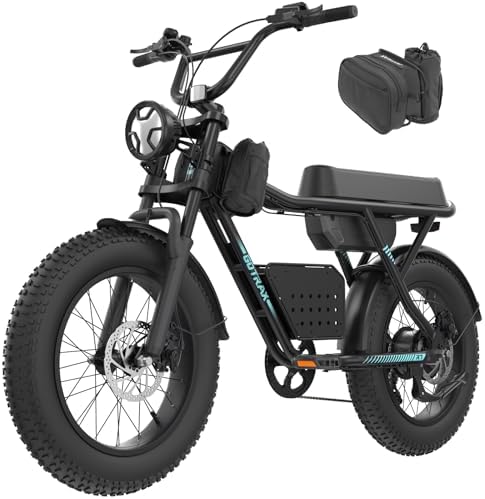
1. Best Overall: Gotrax R7 20″

Who it is for: the rider who wants one bike that handles bad pavement, rain, and a grocery run without buying a second thing. It is the pick we would put a first-time e-bike buyer on.
- Certification: UL 2849, listed for the full electrical and battery system
- Motor: 48V, 750W peak
- Battery: 48V 10.4Ah removable, roughly 500Wh
- Claimed range: up to 45 to 50 miles
- Tires: 20 x 4 inch fat, with front suspension
- Brakes: 180mm mechanical discs, front and rear
- Included: fenders, front basket, frame bag, lights
- Load capacity: 264 lb
- Owner rating: 4.2 stars from 374 ratings, checked August 2026
Why it earned this spot: it is the only bike here that combines UL 2849 certification with a genuinely large body of owner feedback. Every other bike on this list has fewer than ten ratings, which means nobody yet knows how they age. The R7 has hundreds of owners and still holds 4.2 stars. It also arrives commute-ready: fenders, lights, a basket, and a frame bag are in the box, which is easily 100 dollars of accessories you would otherwise buy in week two.
The honest con: 20 inch fat tires are slower and heavier-feeling than 26 inch wheels on smooth tarmac, and they hum. You trade a little efficiency and top-end comfort for stability and pothole tolerance. The 10.4Ah battery is also mid-sized, so the 45 to 50 mile claim assumes low assist and flat ground.
Skip it if: your commute is long, flat, and smooth. A 26 inch wheel bike will feel faster and less tiring over that kind of distance.
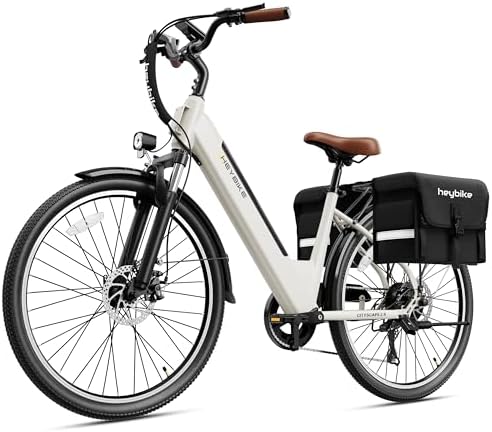
2. Best Classic Commuter Feel: Heybike Cityscape 2.0

Who it is for: someone who wants a normal-looking city bike rather than something that reads as a moped, and who values UL certification.
- Certification: UL certified battery and electrical system
- Motor: 500W nominal, 1200W peak
- Battery: 468Wh removable, IPX6 rated
- Claimed range: 30 to 35 miles on throttle, 35 to 50 miles on pedal assist
- Tires: 26 x 1.95 inch puncture-resistant, front suspension
- Drivetrain: 7-speed with dual disc brakes
- Owner rating: 4.2 stars from 7 ratings, checked August 2026
Why it earned this spot: Heybike publishes an honest split between throttle range and pedal-assist range instead of quoting one optimistic number, which is rarer than it should be. The 26 x 1.95 inch tires roll noticeably faster than fat tires on pavement, and the bike is UL certified, which matters if you charge indoors.
The honest con: it had only 7 owner ratings when we checked, so there is almost no long-term reliability signal yet. A hub motor also works harder than a mid-drive on sustained steep climbs, and front-only suspension means your rear wheel transmits everything.
Skip it if: you want proven reliability data before spending, or your route is genuinely rough. Choose the R7 instead.
3. Best Step-Through and Best Equipped: Jasion Roamer ST

Who it is for: riders who cannot or would rather not swing a leg over a high top tube, and anyone who rides in traffic and wants signalling built in.
- Certification: UL 2849, full electrical system
- Motor: 750W nominal, 1200W peak
- Battery: 528Wh removable, IPX6 rated
- Claimed range: 45 to 60 miles
- Top speed: 28 mph
- Lighting: left and right turn signals, brake light, tail light, headlight
- Drivetrain: 7-speed, front fork suspension
- Owner rating: 4.5 stars from 3 ratings, checked August 2026
Why it earned this spot: the step-through frame is the real accessibility feature, but the turn signals and brake light are the part we keep coming back to. Most e-bikes ask you to take a hand off the bar to signal a turn at exactly the moment you least want to. This one does not. It also has the largest battery of the three UL-certified bikes here.
The honest con: a 28 mph top speed makes this a Class 3 bike, which is restricted or banned on many bike paths and multi-use trails. Check your local rules before assuming you can ride it where you ride now. And with only 3 ratings, reliability is unproven.
Skip it if: you mostly ride on shared paths where Class 3 bikes are not allowed, or you want a bike with a track record.
4. Longest Range on Paper: M2 Pro

Who it is for: a heavier rider, or someone whose commute is long and genuinely rough, who is willing to accept a bike that is difficult to move when the battery is flat.
- Certification: no UL 2849 listing shown on the product page
- Motor: 1800W peak rear hub, 110Nm torque
- Battery: 48V 17.5Ah removable, roughly 840Wh
- Claimed range: up to 85 miles
- Suspension: lockable adjustable front fork plus rear, 26 x 4 inch fat tires
- Brakes: 180mm dual discs
- Weight: 90 lb
- Load capacity: 500 lb
- Owner rating: 4.4 stars from 2 ratings, checked August 2026
Why it earned this spot: the 840Wh battery is roughly double what the Cityscape carries, and that is the single spec that most changes how a long commute feels. Dual suspension and a 500 lb load rating also put it in a different category for heavier riders, who are badly served by most commuter e-bikes.
The honest con: two things. It weighs 90 lb, which means if the battery dies you are pushing a very heavy bicycle, and carrying it up any stairs is not realistic. More importantly, we could not find a UL 2849 listing for it on the product page, unlike the three bikes above. If you charge indoors, that absence should weigh heavily.
Skip it if: you charge inside your home or apartment and want certified protection, or you ever need to lift the bike. Both point you to the R7 or the Cityscape.
5. Lightest and Cheapest: Jasion EB5
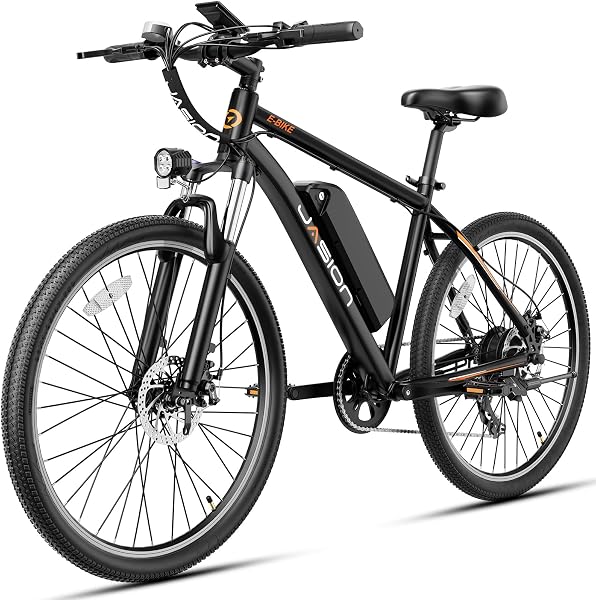
Who it is for: a short commute, a tight budget, and a rider who values being able to move the bike around by hand.
- Certification: no UL 2849 listing shown on the product page
- Motor: 1000W peak
- Battery: 360Wh removable
- Claimed range: 25 to 40 miles
- Top speed: 20 mph, Class 2 territory
- Weight: 49.6 lb, the lightest bike here
- Drivetrain: 7-speed, front suspension, mechanical disc brakes
- Owner rating: 4.2 stars from 4 ratings, checked August 2026
Why it earned this spot: at 49.6 lb it is roughly 40 lb lighter than the M2 Pro, and that changes what you can actually do with a bike day to day: get it up a step, into a hallway, onto a rack. For a commute under about 12 miles each way, the smaller battery is not the limitation people assume.
The honest con: the 360Wh battery is the smallest here by a wide margin, so the 40 mile figure assumes low assist on flat ground. Expect closer to 20 to 25 miles in real mixed riding. And like the M2 Pro, its listing does not show UL 2849 certification.
Skip it if: you charge indoors and want certification, or your round trip is over about 25 miles. The battery is the constraint, and it is not upgradeable.
If your budget stretches: the direct-to-consumer option
Everything above is sold on Amazon, which is where most readers buy and where we can earn a commission. But the strongest commuter e-bikes in the US are sold direct by the manufacturer, and leaving them out would make this guide less useful than it should be. Here is the one we would point you to if you can spend more.
We earn nothing from this recommendation. This bike is sold direct by the manufacturer and we are not in their affiliate programme, so the link below is a plain link with no commission attached. It is here because it is the honest answer for the reader it suits, and we would rather say so than leave it out.
Aventon Level 4 REC
Who it is for: a daily commuter who wants a bike from an established brand with dealer support, and who would rather spend once than replace in two years.
- Certification: the product page states “UL Safety Certified UL 2849”
- Motor: hub motor, 80 Nm (96 Nm in Boost), 1188W peak (1440W Boost)
- Battery: 36V 20Ah, 733Wh, LG 21700 cells, removable
- Claimed range: up to 75 miles
- Class: Class 2, convertible to Class 3
- Brakes: Tektro HD-E3520 two-piston hydraulic disc with motor cut-off
- Tyres: Kenda 27.5 x 2.2 inch
- Weight: 68.5 lb, 300 lb total payload
- Gearing: Shimano 8-speed
- Notable: regenerative braking, plus built-in GPS and 4G tracking
- Price: $1,999 at the time of writing
Why it is worth the gap: it is roughly three times the price of our budget picks, and you can see where the money went. LG 21700 cells rather than unnamed ones, genuine Tektro hydraulic brakes rather than mechanical, 27.5 inch wheels that roll better over broken tarmac than 20 inch fat tyres, and a company with a service network if something fails. The regenerative braking is the headline, but the GPS tracking is arguably more useful day to day.
The honest con: at 68.5 lb it is heavy to carry up steps, and the 733Wh battery is smaller in raw capacity than several cheaper bikes here. It is sold direct only, so there is no Amazon returns process to fall back on.
Velotric Discover 3
Who it is for: comfort-first commuting on rough streets, and anyone who wants both UL standards plus a frame rated for serious combined weight.
- Certification: Velotric states UL 2849 and UL 2271, and additionally ISO 4210 for the frame
- Motor: 750W, 75 Nm
- Battery: 48V system, rated IPX7
- Brakes: hydraulic disc, 180mm rotors
- Suspension: adjustable front fork plus a suspension seatpost
- Tyres: Kenda 27.5 x 2.4 inch puncture-resistant
- Capacity: 440 lb total, bike plus rider plus cargo
- Water resistance: IPX6 bike, IPX7 battery
- Price: $1,999 at the time of writing
Why it is here: two things stand out. It is the only bike in this guide citing ISO 4210 frame testing on top of the UL standards, and the suspension seatpost paired with a suspension fork and 2.4 inch tyres is a genuinely different comfort proposition from the rigid-rear budget bikes above. The 440 lb capacity is also unusually high for a non-cargo commuter.
The honest con: Velotric does not publish a full specification table on the product page, so we cannot verify peak wattage, battery capacity in watt-hours, weight or claimed range, and we will not print numbers we have not confirmed. Ask them directly before buying if range matters to you. It is also the same $1,999 as the Aventon, which does publish everything.
Tenways AGO X
Who it is for: hills, rough ground, or a loaded bike. This is the only mid-drive on the page, and on sustained climbs that is not a marginal difference.
- Certification: Tenways does not state UL 2849 certification on its US product page
- Motor: Bafang M410 mid-drive, 80 Nm
- Sensor: torque sensor
- Battery: 504 Wh, removable
- Claimed range: up to 62 miles
- Class: Class 1, assist to 20 mph, no throttle
- Gearing: Shimano Deore, 10-speed
- Suspension: 100mm SR Suntour lockout fork
- Brakes: hydraulic disc
- Weight: 62.3 lb
- Price: $1,899, reduced from $2,499 at the time of writing
Why it earned this spot: every other bike in this guide, Amazon or direct, uses a hub motor. The AGO X uses a mid-drive, which sends power through the gears rather than driving the wheel directly. On a sustained climb that lets the motor stay in its efficient range instead of labouring, and paired with 80 Nm and a 10-speed Deore cassette it is a genuinely different machine on hills. The lockout fork is the other real addition: firm for road, open for broken ground.
The honest con: 62.3 lb is heavy, and it is Class 1 only, so there is no throttle to help from a standstill and assistance stops at 20 mph rather than 28. Tenways also does not publish a UL 2849 certification statement, which by our own ranking rule counts against it. Mid-drives additionally wear chains and cassettes faster than hub motors, because the power goes through them.
Skip it if: your route is flat. On level ground a hub motor does the same job for less money, and the certified Aventon above states its UL 2849 plainly.
Tenways CGO600 Pro
Who it is for: anyone who has to carry the bike up steps, or wants a commuter that still feels like a bicycle.
- Certification: Tenways does not state UL 2849 certification on its US product page
- Weight: 37 lb, roughly half most bikes in this guide
- Motor: Mivice M080 rear hub, 350W, 45 Nm
- Sensor: Mivice S200 torque sensor
- Battery: 36V 10Ah, 360 Wh, removable
- Claimed range: up to 53 miles
- Class: Class 1, assist to 20 mph, no throttle
- Drivetrain: Gates carbon belt single speed, or Shimano 8-speed chain
- Warranty: 2 years
- Price: $1,599 at the time of writing
Why it earned this spot: weight, and it is not close. At 37 lb this is around half what most bikes here weigh, and that one number changes what is possible: up a flight of stairs, onto a rack, through a hallway, without planning the manoeuvre first. The Gates carbon belt is the quiet second advantage, with no oil, no stretch and effectively no drivetrain maintenance on a bike ridden in all weather.
The honest con: 360 Wh is the smallest battery in this guide and 45 Nm the second-lowest torque, so hills and heavy loads are where you feel the compromise. The single-speed belt version has no gears at all, which reviewers consistently flag as making steep hills genuinely hard work. No stated UL 2849 either.
Skip it if: you have hills. Take the AGO X above, or the certified Aventon.
Tenways CGO800S
Who it is for: a step-through frame, a comfortable upright position, and the least maintenance of anything on this page.
- Certification: Tenways does not state UL 2849 certification on its US product page
- Motor: Mivice M070 rear hub, 250W, 40 Nm
- Sensor: torque sensor
- Battery: 36V 12.8Ah, 460.8 Wh, 18650 cells
- Claimed range: up to 62 miles
- Frame: step-through
- Drivetrain: Gates CDN carbon belt, single speed
- Brakes: hydraulic disc
- Weight: 42 lb bare, about 51 lb with accessories fitted
- Price: $1,699 at the time of writing
Why it earned this spot: the step-through frame matters more than it sounds. Swinging a leg over a loaded bike is exactly when people drop them, and it is the single most common reason riders with limited hip mobility give up on cycling. Pair that with a belt drive needing no oil and no adjustment, 460 Wh of battery and hydraulic brakes, and this is the lowest-effort ownership experience in the guide.
The honest con: 250W and 40 Nm with a single speed is a weak combination on hills, and reviewers say so consistently. On flat ground it is pleasant; on a sustained climb you will be working. It is also heavier than the CGO600 Pro once the fenders and rack are fitted, and carries no stated UL 2849.
Skip it if: your route has any real gradient. This is the flattest-terrain bike on the page.
Who each pick is NOT for
- Gotrax R7 is not for you if your roads are smooth and your commute is long. Fat tires cost speed and range, and a 26 inch wheel bike will tire you less.
- Heybike Cityscape 2.0 is not for you if you want proven reliability. It had 7 owner ratings when we checked, so nobody yet knows how it ages.
- Jasion Roamer ST is not for you if you ride shared paths. Its 28 mph top speed makes it a Class 3 bike, which many trails restrict or ban outright.
- M2 Pro is not for you if you charge indoors or ever lift the bike. Its listing shows no UL 2849 certification and it weighs 90 lb.
- Jasion EB5 is not for you if your round trip is over about 25 miles, or if certification is non-negotiable. Its listing does not confirm UL 2849 either.
- None of these suit you if your commute is under a mile and flat. A regular bike is cheaper and simpler. For 1 to 4 mile trips with tight storage, consider an electric scooter.
Frequently asked questions
How much should I spend on a commuter e-bike?
A commuter with UL 2849 certification, disc brakes, and integrated lights generally starts around $700 to $1,200 on Amazon. Hydraulic brakes and torque sensors tend to appear from about $1,500 upward. Below that, something is usually cut, most often the brakes or the battery quality. Above $2,500 you are paying for refinement and mid-drive systems rather than basic capability.
Are e-bike range claims accurate?
Rarely at higher assist levels. Manufacturers quote range under ideal conditions: lowest assist, flat ground, light rider, no wind. Real commuting with hills and stop-and-go traffic uses considerably more. Treat the headline number as a ceiling, not an expectation.
Hub motor or mid-drive for commuting?
Hub motors are cheaper, simpler, and fine for flat commutes. Mid-drives use the bike’s gears, so they climb better and feel more natural, but cost more. For a hilly commute a mid-drive is worth the premium; for flat city riding a good hub-motor bike is plenty.
Do I need insurance for an e-bike?
In most US states a Class 1 or 2 e-bike is treated like a bicycle and does not require insurance or registration. Some homeowners or renters policies cover theft. Check your local rules, and see our e-bike vs car cost breakdown for how this affects the total.
The picks side by side
Here are the picks together, with live prices pulled from Amazon. The reasoning behind each one is in the write-ups above, and none of these positions were paid for.


How we picked
Be clear about what this guide is. These picks come from research, not from us riding every bike. We compared published specifications, warranty and support terms, and the weight of expert and long-term owner reviews across the e-bike press. We have not personally ridden every bike here, and we will say so plainly rather than imply otherwise. When we do test a bike first-hand, that page will say “tested” and report our own measured numbers.
What we weighted, in order: certification (UL 2849 covering the whole electrical system, not just a cell), how much owner feedback exists (a bike with six ratings is an unknown quantity, however good the spec sheet looks), braking (discs front and rear, and we name the type on each bike), included safety kit (lights and fenders should not be upsells on a commuter), support and parts availability, and total cost of ownership including an eventual battery replacement.
Prices and specifications change often. Verify current details on the retailer page before you buy.
Sources
- National Conference of State Legislatures — State electric bicycle laws: a legislative primer, for how the three-class system is defined and which states have adopted it.
- US Consumer Product Safety Commission — Micromobility: e-bikes, e-scooters and hoverboards, for battery fire risk, charging guidance and the case for certified equipment.
Checked September 2026. Regulations and published figures change; verify the current source before acting on anything here.
Keep reading
- Is an e-bike actually practical for commuting to work?
- E-Bike vs Car: 5-Year Cost Calculator
- Essential commuter gear: locks, lights, panniers
- Electric dirt bikes for adults, if you want moto-style instead
- All e-bike guides
- Going from two cars to one
- How we research and rank
- What UL 2849 actually certifies, and why “compliant” is a weaker word
- How fast can an e-bike go before you need a licence?
- Start with the short trips, not the commute