E-BIKES · GEAR GUIDE · RESEARCH-BASED
The short answer
Buy three things before anything else: a serious lock, a helmet, and lights. A good lock is not optional on an e-bike, because e-bikes are stolen at higher rates than regular bikes and cost far more to replace. Budget roughly 10 percent of the bike’s value for the lock. Everything else here is comfort and convenience, and can wait until you know how you actually ride.
How we picked. These recommendations come from research, not from us using every item. We compared published specifications, independent security ratings where they exist, warranty terms, and the weight of expert and long-term owner reviews. Where we have not used something ourselves, we say so.
Disclosure: Sustainable Transportation is reader-supported. When you buy through links on this page, we may earn an affiliate commission at no extra cost to you. A commission never buys a better ranking. See our affiliate disclosure.
1. A lock, and a better one than you think
This is the purchase people get wrong most often, and the one that costs most when they do. An e-bike is worth several times a normal bike, it is instantly recognisable as valuable, and it is a target.
The honest truth about locks: none are unbreakable. A determined thief with an angle grinder gets through almost anything given time and privacy. What a good lock buys you is time and noise, which pushes the thief toward an easier target. That is the whole game.
How to choose: look for an independent rating such as Sold Secure Gold or Diamond rather than a manufacturer’s own star scale. Hardened steel and a thick shackle matter more than brand. And budget around 10 percent of the bike’s value: on a $1,500 e-bike, a $100 lock is proportionate, not extravagant.
Lock it properly: secure the frame to something immovable, not just the wheel. Fill the U with as little air space as possible, since leverage is a thief’s friend. Keep the keyhole facing down. If you park outside overnight, use two different lock types, because each needs a different tool to defeat.
Maximum security: Kryptonite New York Fahgettaboudit
The one to buy if your bike lives outside in a city, or is worth more than about $1,500. It is heavy, deliberately so: the weight is the security.
The honest con: genuinely heavy to carry, and overkill if you only ever park in a locked garage.

Everyday balance: Kryptonite Evolution Mini-7
The sensible middle. Strong enough for daytime parking in most places, and small enough that you will actually carry it, which matters more than a rating on a lock you left at home.
The honest con: the compact size leaves less room to lock around larger objects, so plan where you park.

Most flexible: ABUS Bordo folding lock
Folds into a compact block that mounts on the frame, then opens long enough to reach around awkward racks and posts that defeat a U-lock. The practical choice if your parking spot changes daily.
The honest con: folding locks have more joints, and joints are what a thief attacks. Strong for the format, not as strong as a heavy U-lock.

2. A helmet you will actually wear
The best helmet is the one you put on every trip, so comfort and looks matter more than people admit. E-bikes travel faster than regular bikes, so this is not the place to skip.
What matters: fit above all, since a helmet that rocks around does not protect you. Look for MIPS or a similar rotational-impact system. Check ventilation if you ride in heat. And replace a helmet after any crash, even one leaving no visible damage, because the foam is designed to crush once. If you ride a Class 3 e-bike at higher speeds, look for a helmet rated for higher-speed use rather than a basic cycling shell.
Best looking: Thousand Heritage
Designed to look like something you would wear off the bike, which is exactly why people keep it on. It also has a hidden slot so you can lock the helmet to the bike.
The honest con: fewer vents than a sport helmet, so it runs warm on hot climbs.

Best value: Retrospec adult helmet
Covers the basics at a price that makes helmets for the whole household realistic. A certified budget helmet you wear beats a premium one you leave at home.
The honest con: heavier and less refined in fit and finish. Check whether the model you choose includes a rotational-impact system.

3. Lights, even in daylight
Many e-bikes include integrated lights. If yours does, check they are bright enough before assuming they are sufficient, because plenty are “be seen” lights only.
The distinction that matters: a be-seen light makes you visible to drivers on lit streets. A see-by light lets you actually see unlit road surface. If any part of your route has no street lighting, you need the second kind, and roughly 600 lumens is a sensible floor.
Run a flashing rear light during the day too. Daytime running lights measurably improve how early drivers notice you, and being hit from behind is a leading risk for commuters. Look for USB rechargeable, a mount you can move between bikes, and side visibility for junctions.
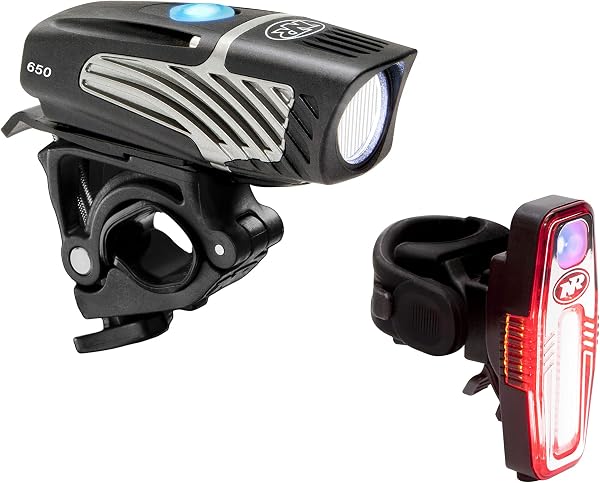
Best all-round: NiteRider Lumina
A long-standing commuter favourite with enough output to genuinely light unlit paths, plus a lower setting for street riding so you are not blinding oncoming traffic.
The honest con: at maximum brightness the battery drains quickly. Plan around the runtime for the mode you actually use.
Best for daytime visibility: Cygolite Metro Plus
Strong daylight flash modes designed to be noticed in traffic rather than only to illuminate the road, which is the more common need for city commuters.
The honest con: the mount is fiddlier to move between bikes than some rivals.

4. Carrying things without a sweaty back
A backpack works until the first warm day, then it becomes the reason you stop riding. Panniers move the weight onto the bike, where it belongs.
What matters: genuine waterproofing rather than a rain cover you will lose, a mounting system that clips on and off in seconds, and enough capacity for a laptop plus a change of clothes. Check the bag fits your rack, since not all are universal.
Best value: Rockbros pannier
Covers the essentials at a price that makes trying panniers easy, with water resistance adequate for ordinary commuting.
The honest con: mounting hardware is less refined than premium brands, and water resistant is not the same as waterproof.

Best everyday commuter bag: Ibera pannier
A well-regarded commuter bag with a solid mounting system and a shape suited to a laptop and work clothes rather than touring gear.
The honest con: capacity is aimed at commuting, so it is not the choice for a full grocery run.

5. The two things that prevent most problems
A floor pump with a gauge: Topeak JoeBlow
The least exciting and most useful thing here. Most flats are not punctures, they are pinch flats caused by riding on soft tires, and e-bikes are heavy enough that correct pressure matters more than on a normal bike.
Check pressure weekly against the range printed on the tire sidewall. The gauge is the point; hand pumps guess.
The honest con: it lives at home, so carry a mini pump or CO2 for roadside fixes.

A pocket electric pump for roadside fixes: CYCPLUS AS2 Ultra
The companion to the floor pump above, not a replacement for it. At 90 grams it genuinely lives in a jacket pocket or saddle bag, and it inflates to 120 PSI on its own so you are not hand-pumping a heavy e-bike tire at the roadside in the rain.
- Weight: 90g
- Max pressure: 120 PSI
- Valves: Presta and Schrader
- Notable: auto-stop and a pressure gauge, so you inflate to a number rather than by feel
Why it stands out: it solves the one thing a floor pump cannot, which is a flat that happens three miles from home.
The honest con: it is a battery device, so it needs charging and will be flat exactly when you forget. It is also slower than a floor pump for routine weekly top-ups, so buy it in addition to one rather than instead of one.

6. Phone mount, with one warning
Useful for navigation, and a secure mount is worth paying for, because a phone that shakes loose at 20 mph is an expensive lesson.
Worth knowing: some phone manufacturers advise against mounting phones on high-vibration handlebars, because sustained vibration can permanently damage the camera’s optical image stabilisation. Vibration-damping mounts exist for exactly this reason. If your phone is new and expensive, choose a damped mount rather than a rigid clamp.

What to buy first, in order
- Lock, before the bike is ever parked anywhere.
- Helmet, before the first ride.
- Lights, before the first ride that ends after dark, which arrives sooner than you plan for.
- Fenders, before the first wet week, if the bike did not include them.
- Panniers, once you are riding regularly and tired of a hot back.
- Floor pump, within the first month, before the first avoidable flat.
- Phone mount, whenever navigation starts to annoy you.
What you probably do NOT need
- Cycling-specific clothing, for most commutes. Electric assist means you usually arrive without needing to change.
- A second battery, unless your daily round trip genuinely exceeds real-world range. They are expensive and heavy.
- A bike computer. Your phone already does this.
- Clipless pedals and shoes on a commuter. Flat pedals and normal shoes are the point.
- A maximum-security lock, if the bike lives in a locked garage and never parks in public. Match the lock to the risk.
Frequently asked questions
How much should I spend on a bike lock?
A common guideline is about 10 percent of the bike’s value, so roughly $100 to $150 on a $1,500 e-bike. Look for an independent rating such as Sold Secure Gold rather than a manufacturer’s own scale, and remember a lock buys time and noise rather than certainty.
Is my e-bike covered by home insurance?
Sometimes, but often with a limit below the bike’s value, and some policies require a specific lock standard for a claim away from home. Call your insurer, ask specifically about e-bikes, and ask what lock they require. Doing that before a theft rather than after is the entire point.
Do I need special gear for winter riding?
Less than you think. Fenders, good lights, and gloves cover most of it. The bigger winter issue is the battery: cold reduces range noticeably, so charge indoors and store the battery at room temperature rather than in a freezing garage.
Sources
- National Conference of State Legislatures — State electric bicycle laws: a legislative primer, for how the three-class system is defined and which states have adopted it.
- US Consumer Product Safety Commission — Micromobility: e-bikes, e-scooters and hoverboards, for battery fire risk, charging guidance and the case for certified equipment.
Checked September 2026. Regulations and published figures change; verify the current source before acting on anything here.
Keep reading
- Best commuter e-bikes
- All e-bike guides
- E-bike vs car cost calculator
- What UL 2849 actually certifies, and why “compliant” is a weaker word