“Airline approved” is not a certification. Nobody issues it. No agency and no airline body approves scooter models, so any seller can print the phrase, and most do.
What actually decides whether your scooter gets on the plane is one number: the watt-hour rating of its battery. The FAA caps lithium ion batteries on mobility devices at 300 Wh.
Here is the problem we ran into while researching this page, and the reason it exists: almost no listing tells you that number.
Disclosure: Sustainable Transportation is reader-supported. When you buy through links on this page, we may earn an affiliate commission at no extra cost to you. A commission never buys a better ranking. See our affiliate disclosure.
The rule, in plain terms
From the FAA, for a mobility scooter with a lithium ion battery:
- 300 watt hours is the limit for the battery powering the device.
- Spares: one of up to 300 Wh, or two of up to 160 Wh each. Spares go in carry-on only, never checked.
- Lithium metal batteries, meaning the non-rechargeable kind, are forbidden on these devices.
- If the scooter protects the battery by design, it can stay installed, securely attached with terminals protected against short circuit.
- If it does not, the battery must come out, be protected from damage, and travel in the cabin.
- You must tell the airline where the battery is, and the airline must tell the pilot in command.
- Individual airlines may be stricter than the FAA. The federal rule is a ceiling, not a guarantee.
Why you cannot check compliance from most listings
This is the finding that shaped this guide, and we think it is the single most useful thing on the page.
We searched 169 travel and portable mobility scooter listings. Four stated a watt-hour figure. Four.
Two of those four, both sold as portable, were 380 Wh and 499 Wh — comfortably over the 300 Wh limit. They are marketed for travel and they cannot legally fly on their own battery.
The rest quote amp-hours, which on its own tells you nothing.
The arithmetic you need is simple: volts × amp-hours = watt-hours.
- A 24 V, 10 Ah battery is 240 Wh. Legal, and under the 300 Wh cap.
- A 24 V, 12 Ah battery is 288 Wh. Still legal, but with very little margin.
- A 24 V, 18 Ah battery is 432 Wh. Not flying.
Watch the trap in dual-battery scooters. A listing advertising “airline-friendly dual 8 Ah batteries” and no voltage is unusable information: at 12 V that is 96 Wh each and fine, at 24 V it is 192 Wh each and over the 160 Wh ceiling that applies when you carry two spares. Same listing, same words, opposite answers.
So the rule for buying is this: if the seller will not tell you the watt-hour rating in writing, treat the scooter as not airline-ready, whatever the product title claims. Ask before you buy, not at the check-in desk.
What the airline must do for you
Most travellers do not know how much the law is on their side here. Under the Air Carrier Access Act:
- They cannot charge you for accommodations the rule requires, including hazardous materials packaging for your battery — and the airline provides that packaging.
- They generally cannot demand advance notice just because you have a disability. Up to 48 hours can be required only for specific cases, such as an electric wheelchair on an aircraft with fewer than 60 seats.
- On domestic US flights they must compensate you in full for a lost or damaged wheelchair or scooter, without the liability limits that apply to ordinary baggage.
- A December 2024 DOT rule created a presumption that the airline is liable for damage while your device is in its care.
Photograph the scooter at the gate before you hand it over. It costs nothing and it is the evidence that makes the rule above worth having.
Our picks
We rank these on what can actually be verified: whether the battery comes out, what the manufacturer states about air travel, weight, and how much owner evidence exists. Where a watt-hour figure is not published, we say so instead of guessing.
1. Best Overall: Pride Go-Go Super Portable

- Battery: lithium, described by Pride as airline compliant
- Watt-hours published: no — ask the seller before buying
- Owner rating: 4.9 from 7 ratings, checked August 2026
- Warranty: 3 years frame, 2 years electronics and drive motor
Why it leads: Pride is an established mobility manufacturer rather than a marketplace brand, the warranty is the longest here, and it is the only one of the three where the maker itself makes an air-travel claim it can be held to. The 4.9 average is thin at 7 ratings, but the brand has a long track record outside this listing.
The honest con: like almost everything in this category, the watt-hour figure is not in the listing. Get it in writing before you buy if flying is the whole point of the purchase.
2. Best for Long Trips: ATmobi X3
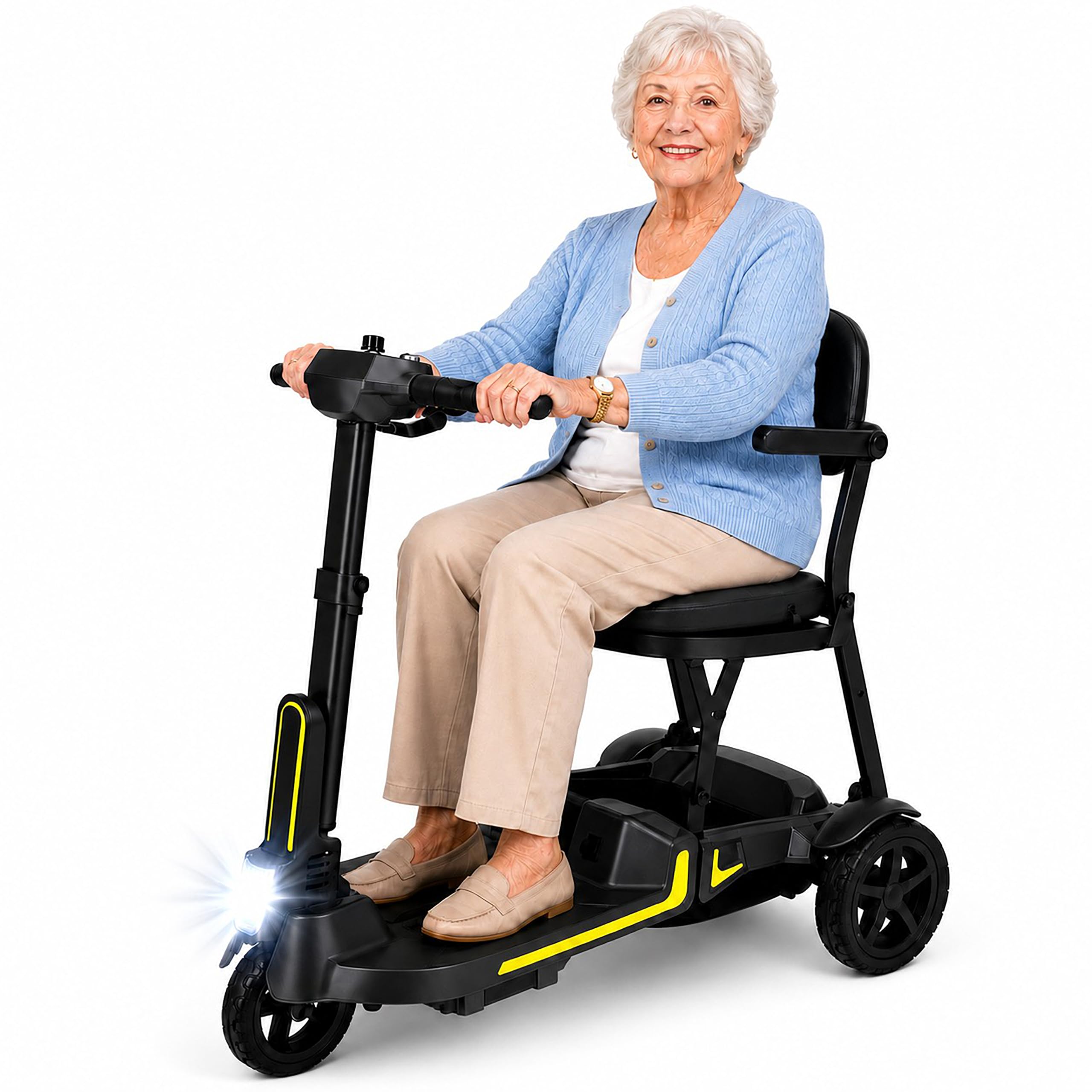
- Weight: 31.7 lb, the lightest here
- Battery: dual removable lithium, 8 Ah each (10 Ah on the long-range version)
- Watt-hours published: no — voltage is not stated, so the Wh cannot be calculated
- Range: 20 or 32 miles depending on version
- Capacity: 265 lb · Turning radius: 33 in
- Owner rating: 5.0 from 3 ratings, checked August 2026
Why it earns a place: removable batteries are exactly the design the FAA rules favour, and two smaller packs are easier to keep under the per-battery ceiling than one large one. At 31.7 lb it is also the easiest here to lift.
The honest con, and it is the reason it is not first: this is the listing we used above as the example of the problem. It advertises “airline-friendly dual 8 Ah batteries” without stating voltage, so nobody can verify from the page whether each pack is under 160 Wh. That is not a criticism of the scooter, which may well be compliant. It is a criticism of the information. Demand the figure.
3. Most Stable: SCOOTNGO Voyager
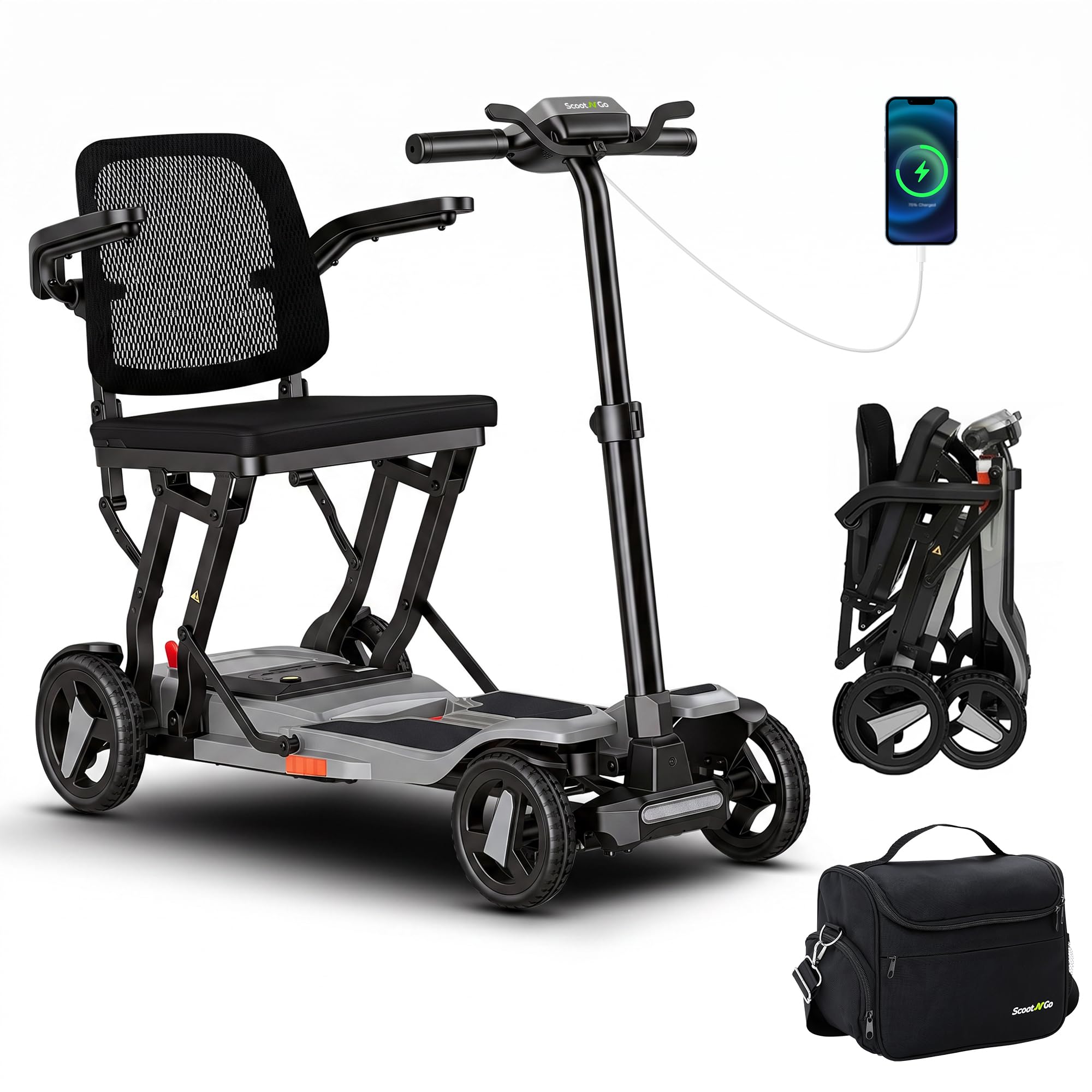
- Weight: 33 lb
- Wheels: four, for more stability than the three-wheel options
- Watt-hours published: no
- Owner rating: 5.0 from 7 ratings, checked August 2026
Why it earns a place: four wheels for barely any extra weight. If you are nervous on a camber or a sloped jet bridge, that is the trade worth making. See three wheels or four for why it matters more than people expect.
The honest con: same missing watt-hour figure, and a four-wheel frame turns wider in an aircraft aisle or a narrow hotel corridor.
Before you fly: the checklist
- Get the watt-hour rating in writing from the seller or manufacturer. If it is over 300 Wh, the scooter does not fly on that battery.
- Call the airline even though they usually cannot require it. Ask specifically whether the battery may stay installed, or must be removed and carried in the cabin.
- Find out if the battery is protected by design. That single answer decides whether you carry it on or leave it in place.
- Print the manufacturer battery documentation and take it with you. Ground staff often have not seen your model before.
- Arrive early. The FAA itself notes that advance arrangements and extra check-in time may be necessary.
- Photograph the scooter at the gate before handing it over.
- Never put a spare battery in checked baggage. Spares travel in the cabin, always.
Who this is NOT for
- Anyone needing a heavy-duty or all-terrain scooter. Those batteries are far over the limit and the frames do not fold. See heavy-duty scooters.
- Anyone who will not be flying. If the scooter only ever goes in a car boot, weight and folding matter and watt-hours do not. See transporting a scooter by car.
- Anyone who needs to stay seated in the device during the flight. That is a different conversation with the airline, and possibly a power wheelchair question.
- Anyone hoping Medicare pays for it. It does not cover devices bought for travel. See what Medicare actually covers.
Frequently asked questions
What makes a mobility scooter airline approved?
Nothing official. No government agency or airline body certifies scooters as airline approved, so the phrase is marketing language. What actually governs whether your scooter can fly is the battery: the FAA limits lithium ion batteries on mobility devices to 300 watt hours, and spare batteries must be carried in the cabin.
What is the watt-hour limit for a mobility scooter battery on a plane?
300 watt hours for a lithium ion battery powering the device. For spares you may carry one of up to 300 Wh, or two of up to 160 Wh each, and spares must go in carry-on baggage, never checked. Lithium metal, meaning non-rechargeable lithium, is forbidden entirely on these devices.
How do I work out the watt-hours if the listing only gives amp-hours?
Multiply volts by amp-hours. A 24 volt 10 Ah battery is 240 Wh. This matters because most listings quote amp-hours only, which tells you nothing on its own: 8 Ah could be 96 Wh at 12 volts or 192 Wh at 24 volts, and only one of those fits inside the two-spare limit.
Does the battery have to be removed?
It depends on the scooter. If the design protects the battery adequately and it is securely attached with the terminals protected, it can usually stay installed. If it is not protected by design, the battery must be removed, its terminals protected, and it must travel in the cabin. You must also tell the airline where the battery is, and the airline must tell the pilot.
Does the airline charge to carry a mobility scooter?
No. Under the Air Carrier Access Act, US airlines may not charge for accommodations the rule requires, including hazardous materials packaging for batteries, and the airline supplies that packaging.
What happens if the airline damages my scooter?
On domestic US flights, carriers must fully compensate you for loss or damage to a wheelchair or other assistive device, without the liability caps that apply to ordinary baggage. A December 2024 DOT rule also created a presumption that the airline is liable for damage while the device is in its care.
Do I have to give the airline advance notice?
Generally no. Airlines may not require advance notice simply because a passenger has a disability. They may require up to 48 hours for specific situations that need preparation, such as carrying an electric wheelchair on an aircraft with fewer than 60 seats. Even where it is not required, calling ahead is worth it.
Can I take my scooter to the gate?
Usually yes. Most travellers ride to the gate and check the scooter there, collecting it on the jet bridge at the other end. Confirm gate check with your airline, since folded devices cannot always be accommodated in the cabin.
Sources
- FAA PackSafe — Wheelchairs and Mobility Devices, for the 300 Wh limit, spare battery rules, removal and terminal protection requirements, and notification of the pilot in command. Regulation: 49 CFR 175.10(a)(17).
- US Department of Transportation — Air Carrier Access Act, for the ban on charging for required accommodations, advance notice limits, and full compensation for damaged assistive devices on domestic flights.
Checked August 2026. Battery rules and airline policies change; verify with the FAA and your carrier before travelling.
We do not test these products. Our recommendations are based on published specifications, stated certifications and owner feedback. This page explains regulations but is not legal advice, and airline staff have the final say at the gate.